Global Mobility
Why Aequify Earned SOC 2 Type II | Secure Expat Financial Platform
Security/trust announcement covering the SOC 2 Type II audit and what it means for expats handing over financial data.
 Puneet GuptaFounder @ Aequify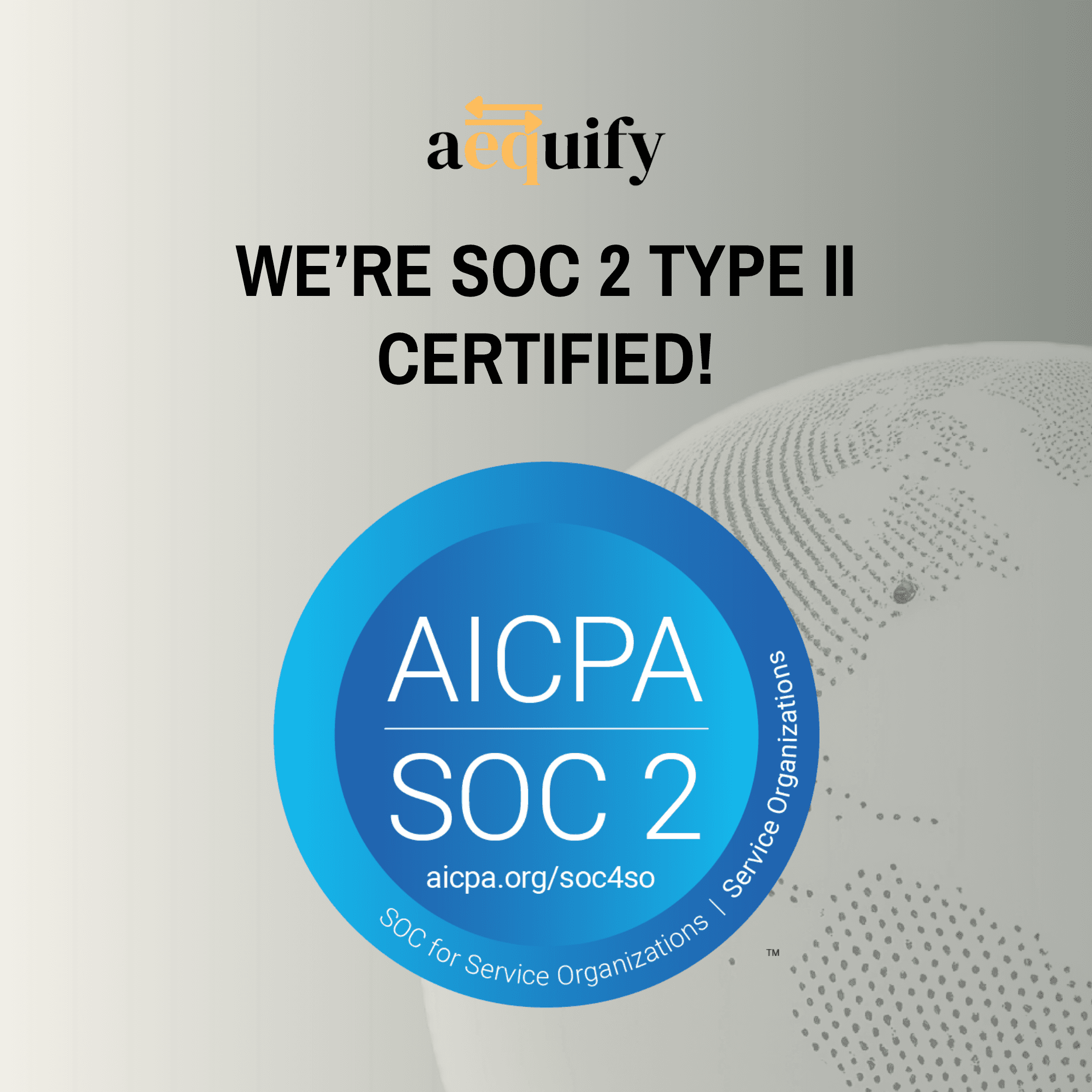
Why We Built Security Into Aequify Before We Wrote a Single Line of Code
Aequify recently received SOC 2 Type II certification.
For a startup, that is a real commitment. It takes time, money, and focused effort that an early team can always find reasons to delay. We did the opposite.
Before we built the product, we made one thing clear
Before we wrote the first line of code, our first discussion was how can we win and retain customers trust for long term.
Aequify is built for expats, immigrants, and globally mobile people. These are people whose financial lives stretch across more than one country. Bank accounts in different jurisdictions. Tax obligations under both US and European law. Income, assets, and records spread across multiple systems. That data is not ordinary. It is personal, legally significant, and often the thing standing between someone and a serious compliance mistake.
I know this because I have lived it. When your financial life is split across countries, trust becomes everything. You want to know where your data sits, who can access it, and whether the company holding it takes security seriously. As a founder, I did not want to build a platform that asked people to take that on faith.
Security was never something we built in from day one, not to add later.
What is SOC 2 Type II and why does it matter for your expat finances?
A lot of companies say they take security seriously. We want to be at the forefront of most advance security measure and have it reviewed by 3rd parties.
SOC 2 Type II is an independent audit, conducted by a certified third-party firm, that tests whether a company's security controls are not only well designed but working consistently over time. That last part matters. It is not a one-time snapshot. It evaluates your systems and processes across an extended review period, typically six to twelve months.
For anyone trusting a platform with sensitive cross-border financial data, that distinction is significant. SOC 2 Type II covers five areas: security against unauthorized access, system availability, processing integrity, data confidentiality, and privacy. When you connect your accounts to Aequify, you are not relying only on what we say. You have independent, third-party verification.
Is my financial data safe when it crosses borders?
This is the real question for the expats. Your financial data does not stay in one place. It moves between your tax obligations, your host country bank accounts, and the platforms you use to manage both. Each of those movements carries risk, and each is governed by different rules.
For example, living as a US person in Europe means your data sits at the intersection of two powerful regulatory worlds. GDPR on one side. FATCA and IRS reporting requirements on the other. Many platforms are built for one or the other. Aequify is designed for people who have to navigate both.
Our infrastructure runs on AWS with enterprise-grade encryption and strict access controls. Our data architecture is built for the specific complexity of cross-border financial information. And we have designed our platform to be GDPR-aligned, meaning your rights over your own financial data are built into how we handle it, not just acknowledged in a policy document.
The SOC 2 Type II certification is the formal proof that what we built works the way we say it does.
What this means for expats and the advisors who work with them
If you are an expat using Aequify, SOC 2 Type II means there is independent verification behind how your data is handled. You do not have to rely only on our word.
If you are a tax or financial advisory firm offering Aequify to your clients, it means something just as concrete. Your clients trust you to be careful about every platform you put in front of them. Their sensitive financial information, often spanning multiple countries, deserves that care. This certification is the answer to the security question before it is asked.
Security is not a milestone. It is a standard
Getting certified matters, but we do not see it as a finish line. It is a floor.
As Aequify grows, we will keep investing in data security, privacy, and infrastructure that is worthy of the trust people place in us. Because the people using Aequify are entrusting us with their most sensitive financial information across borders, and that is not something you treat casually.
We are building the platform we would want to use ourselves as expats. That standard does not change.
Common questions about Aequify's data security
Is Aequify SOC 2 Type II certified?
Yes. Aequify holds a SOC 2 Type II certification, independently audited and verified by a certified third-party firm.
What does SOC 2 Type II mean for my financial data?
It means an independent auditor has tested Aequify's security controls over an extended period, not just at a single point in time, and confirmed they operate as designed. Your data is protected against unauthorized access, and you have third-party assurance.
Is Aequify GDPR compliant?
Aequify is designed to be GDPR-aligned. If you live in the EU or UK, your rights over your personal financial data are built into how we handle it, not just referenced in a policy document.
What security standard should I look for in an expat tax platform?
At minimum: SOC 2 Type II certification, end-to-end encryption, strict access controls, and clear transparency about how your data is stored and used across jurisdictions. Ask any platform you consider whether they have an independent audit report, not just a privacy policy.
Is it safe to connect my financial accounts to Aequify?
Yes. Account connections are read-only and processed through encrypted, access-controlled infrastructure that has been independently audited under our SOC 2 Type II certification.
Does being a US-based platform create data privacy issues if I live in Europe?
This is the right question to ask. Aequify is designed specifically for people living across US and European jurisdictions. We are GDPR-aligned and built to handle the specific data complexity that comes with cross-border financial life.
Aequify is a secure, AI-powered financial hub for globally mobile people, starting with cross-border tax compliance. Learn more at aequify.com.